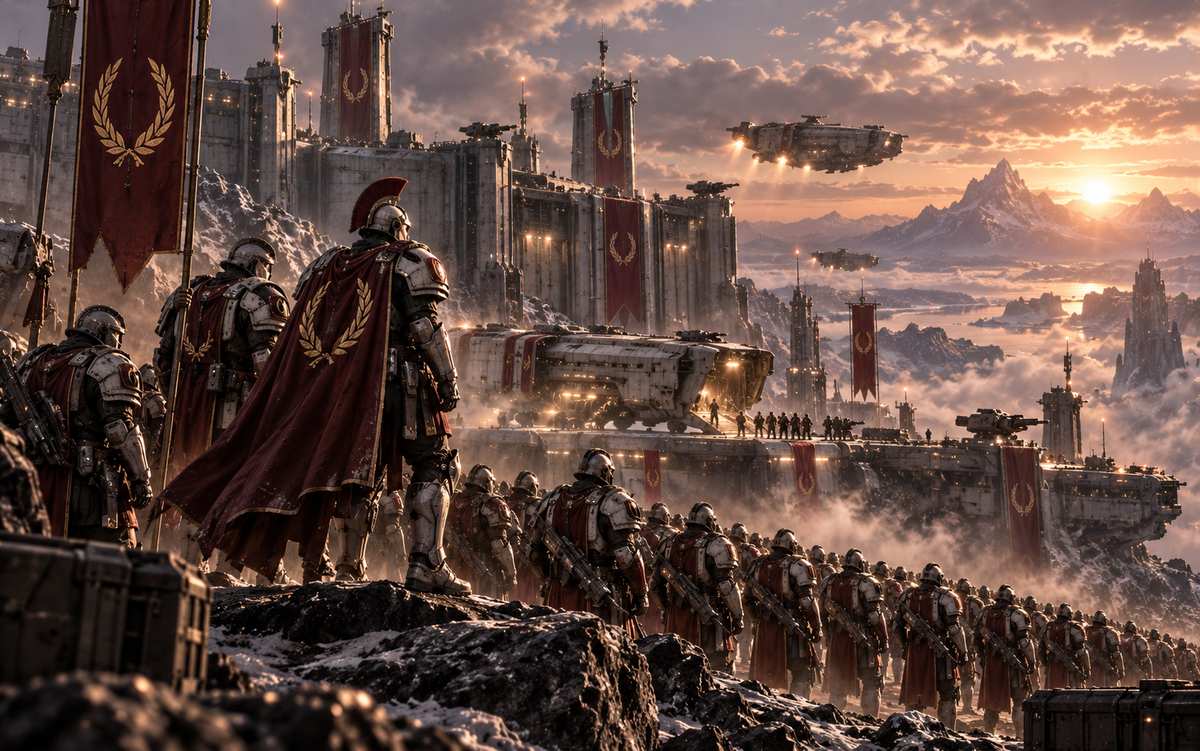
The full story
Why we exist, and what we hold.
Nova Roma is a company of citizen-soldiers on the frontier of Astra. This is the long version: where the idea comes from, what the Pax means, who the legions are, what we offer, how we do it, and what we ask in return.
I · The distance
Rome did not fall because its enemies were strong.
It fell because the distance between its capital and its borders grew faster than its will to cross it. The roads were still there. The legions were still there. What ran out was the decision, taken in a warm room a thousand miles from the frontier, to send them.
Every power since has repeated the mistake. Charters signed in the core mean nothing twelve jumps out. A distress call reaches fleet command weeks late, and the answer arrives enormous, expensive, and long after the thing worth saving has already burned. The great governments are not cruel — they are simply far away, and past a certain distance the difference stops mattering.
Out here the distance has a shape. It is the freighter that jumps into a lane nobody patrols. It is the new pilot with one small hull and no one to call. It is the settlement that files a report, waits, and learns that the report was the answer. Pirates, raiders and criminals do not hunt fleets. They hunt the people who are alone, because the people who are alone are the ones nobody comes for.
The frontier did not need another contractor. It needed something permanent. So we stopped asking to be protected.
II · The Pax
We did not take the conquest. We took what came after.
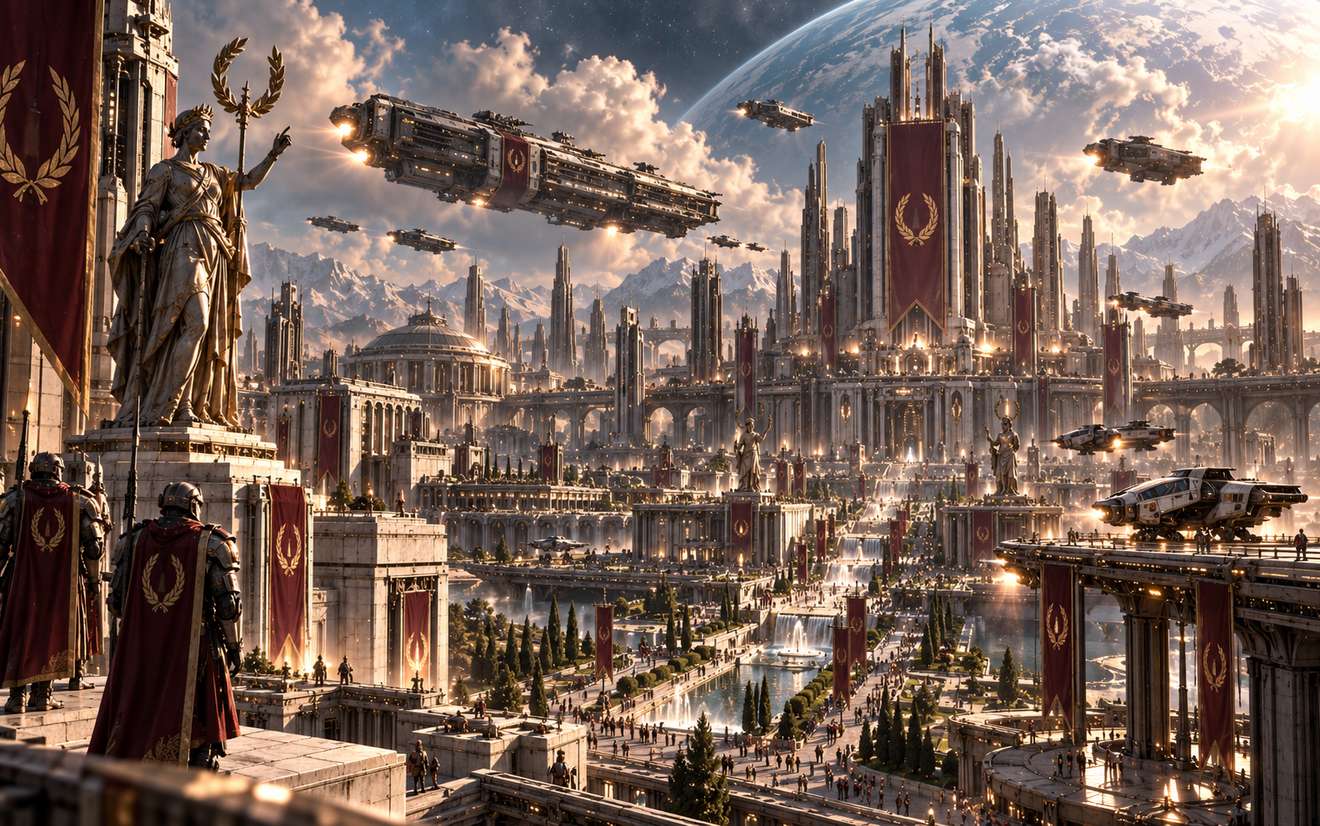
From the old city we did not take the conquest — any warlord with enough hulls manages that for a season. We took what came after: the roads, the garrisons, the four centuries in which a merchant could cross a continent and expect to arrive alive. The Pax Romana was not an absence of violence. It was violence organized, restrained, and pointed in one direction — at the people who made the roads unsafe.
That is the whole of our doctrine, and it fits on a coin: Pax non datur. Tenetur. Peace is not given. It is held. Nobody hands it to you; nobody signs it into existence in a room far away. It is held by someone standing at the edge, awake, close enough to reach the fire while it is still small.
Inside our space the Pax is a debt we owe. Beyond it, an offer: extended to any system that asks, on terms, never at gunpoint. We do not annex. Territory taken by force is a garrison; territory that asks is a province. A garrison costs you every day you hold it. A province holds itself, because the people in it have decided the roads are worth keeping open.
We are measured by one thing only — whether a freighter captain with no name and no patron can cross our space and reach port with his cargo intact. Not the size of the fleet. Not the number of banners. That one crossing, made safely by someone who owes us nothing, is the entire point.
III · The Legions
They stopped waiting to be sent.
The founding cohort was career military. Officers who resigned rather than carry out orders they could not defend, and soldiers who stayed in systems their commands had written off as unprofitable to hold. They had not stopped believing in the uniform. The uniform simply kept arriving too late and too loud.
They kept the discipline and threw away the distance. They kept the ranks — Tiro, Miles, Centurio, up the ladder to the Proconsul — because a rank is a job with a name, and a job with a name is one somebody can be held to. They took the Standard, the laurel and the crested helm, not as a claim on the old empire but as a reminder of what the old empire got right for four hundred years before it forgot.
Today the legions fight in small units with real authority. Operators are chosen as much for judgment as for marksmanship, because the hard part is knowing which problems need a trigger and which need a conversation, a landing, or a hull parked visibly in orbit where the wrong people can count the gun ports.
Most operations end without a shot. That is doctrine, not squeamishness. Force is authorized, fully and without apology, when it is the correct tool — never the first reached for, never the loudest on hand. And nobody is left where they fell. Medical and recovery vessels ride with every deployment, because a legion that abandons its wounded has already told its soldiers what they are worth.
IV · What we offer
Security. Wealth. A place.
Security. Not a contract, a presence. Anyone flying under the Standard never crosses alone. The lanes we declare open are patrolled, distress calls are answered, and nobody is written off because the recovery was inconvenient. If someone jumps you, you are not negotiating with pirates. You are waiting for their bill to come due.
Wealth. Peace, held properly, is the most profitable thing there is. A protected frontier economy produces more than a looted one. We do not live on plunder — we live on what we mine, refine and haul. The proceeds do not sit in a vault at the top. They fund hulls, components and operations for the people flying.
A place. Nobody here is a number. Every citizen-soldier has a team, a role, training, and people who know their callsign by heart. You are placed in a contubernium on day one. You are never the spare pilot somebody forgot to invite.
And as Nova Roma grows, the compact holds for every citizen who enters — soldier, pilot, facility worker, patrol, hauler: personal quarters, equipment for your role, a ship or a ground vehicle when duty calls for it, and help when you need it. In return we ask four things, and only these: help to the community, help to the citizen beside you, help to our walls, help to our future.
V · How we do it
Three arms. One standard.
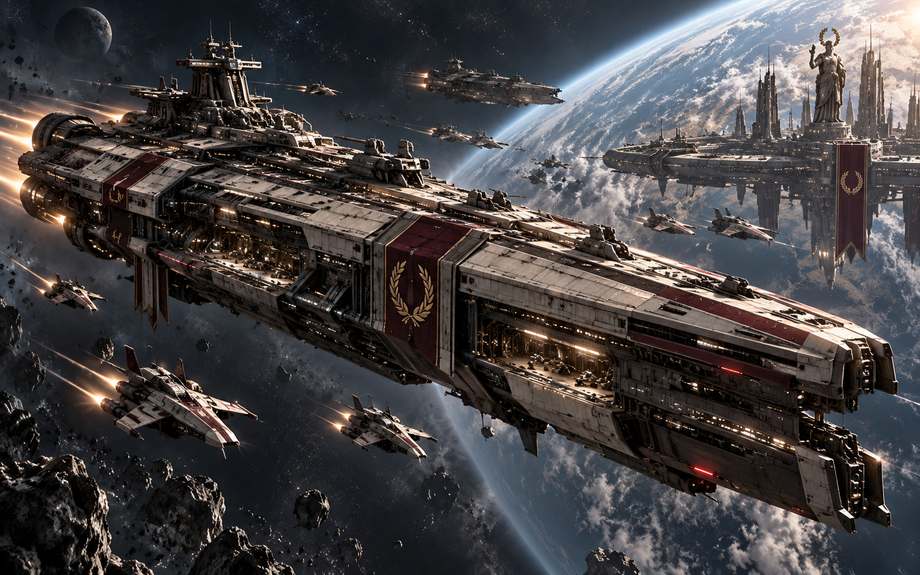
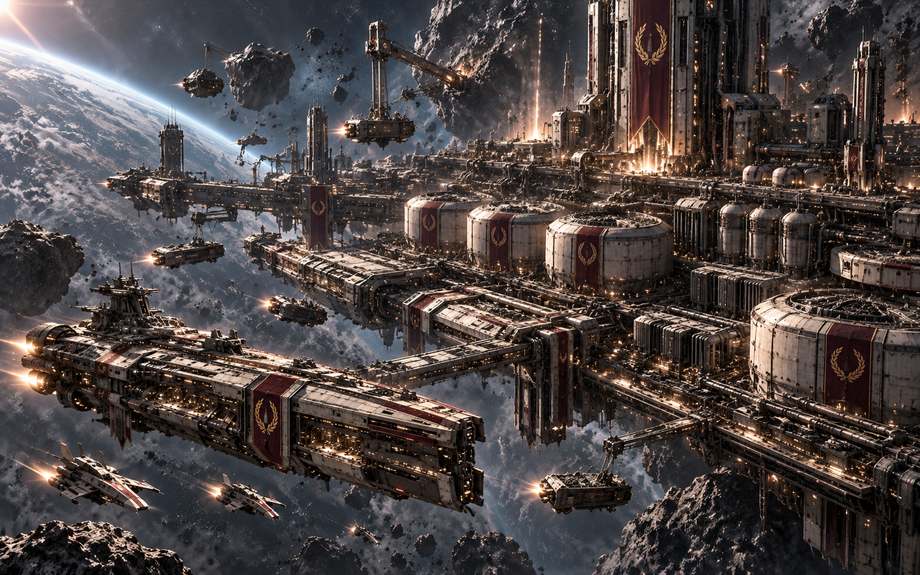
The Fleet. Capital ships as the backbone — orbital anchors, command centres and support platforms able to hold a system by presence alone. Around them: fighter and interceptor wings for near-space superiority, gunships for direct action, and medical and recovery vessels attached to every deployment. Nobody is left where they fell.
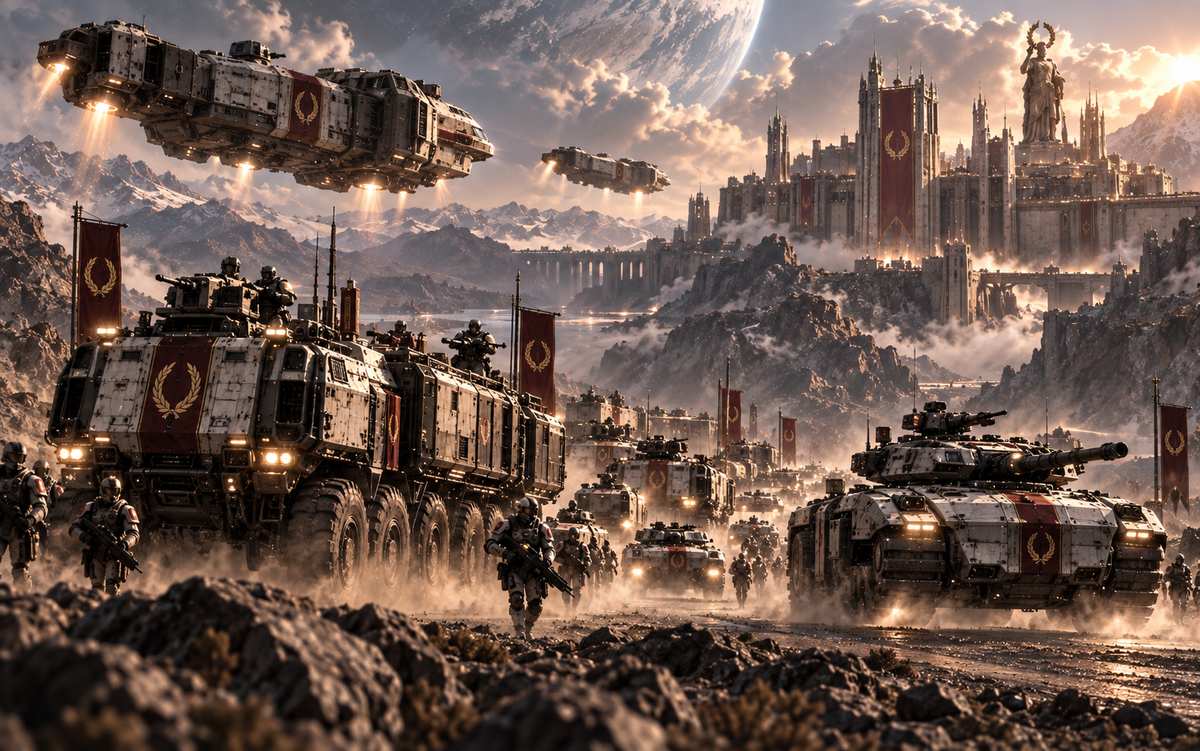
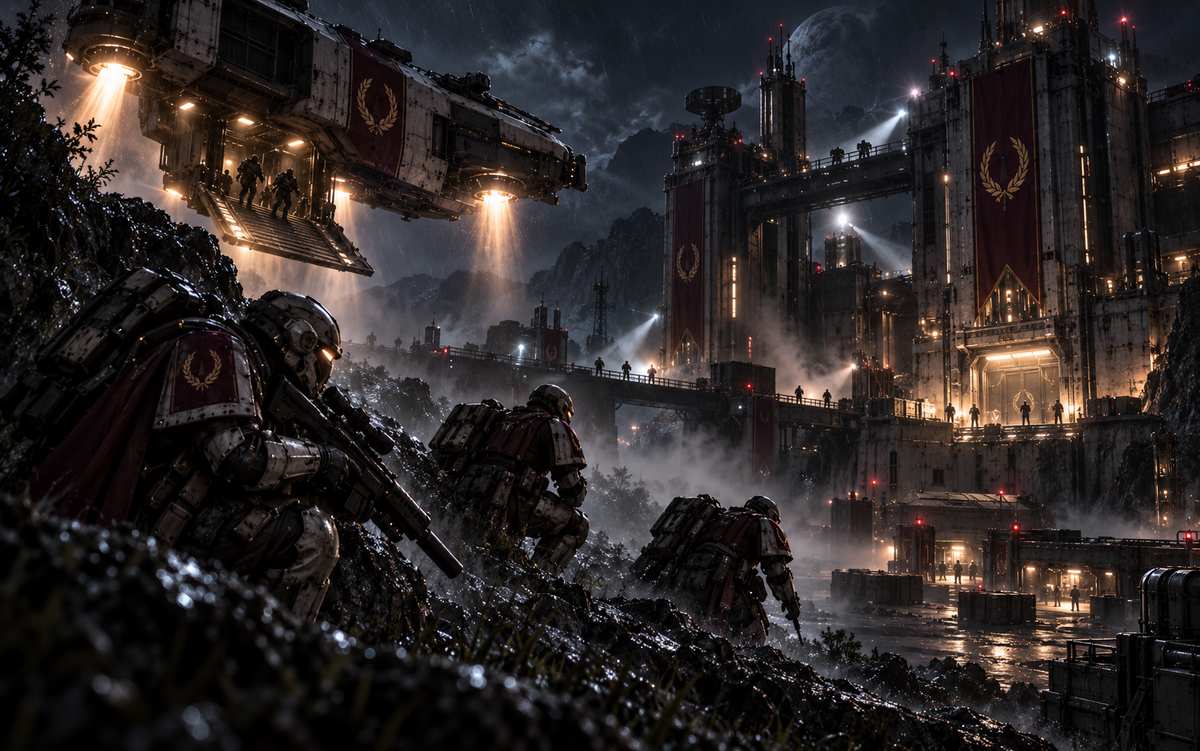
The Ground Cohorts. Armoured infantry, vehicles and dropships, because stations and settlements are held with boots on the deck. A hull in orbit can deny a system; only a cohort on the ground can keep a settlement. They board, they clear, they hold, and they hand the place back to the people who live there.
The Industry. Mining fleets, refineries, shipyards and escorted convoys behind all of it. A legion that depends on outside suppliers fights only as long as someone else permits. We supply ourselves — and we arm ourselves from one catalogue, so that a cohort deploys knowing exactly what the next man carries.
The Ladder. Fourteen ranks, from Tiro to Proconsul, and every one of them carries a real job. You are promoted when you are already doing it, not before. Nobody buys a rank, and nobody keeps one they have stopped earning.
VI · The Standard
The old city is dust.
Its walls are gone, its rulers forgotten, its language spoken by no one living. What outlasted it was smaller and far more stubborn than marble — someone standing at the edge, awake, close enough to reach the fire while it is still small.
That is what the Standard means when it flies over a lane, a station, a settlement. Not a claim. A promise that somebody is watching, and that they are close enough to matter.
If you are new, and you are tired of crossing alone: the gates are open. Your first day here is not spent alone.